

Introduction to Gastric Sleeve Surgery in Turkey
Morbid obesity is a major global health challenge that severely impacts physical health, mental well-being, and overall quality of life. Among various weight loss solutions, gastric sleeve surgery in Turkey (laparoscopic sleeve gastrectomy) stands out as the safest and most effective medical intervention to achieve long-term weight reduction and cure chronic obesity-related diseases.
What is Gastric Sleeve Surgery (Sleeve Gastrectomy)?
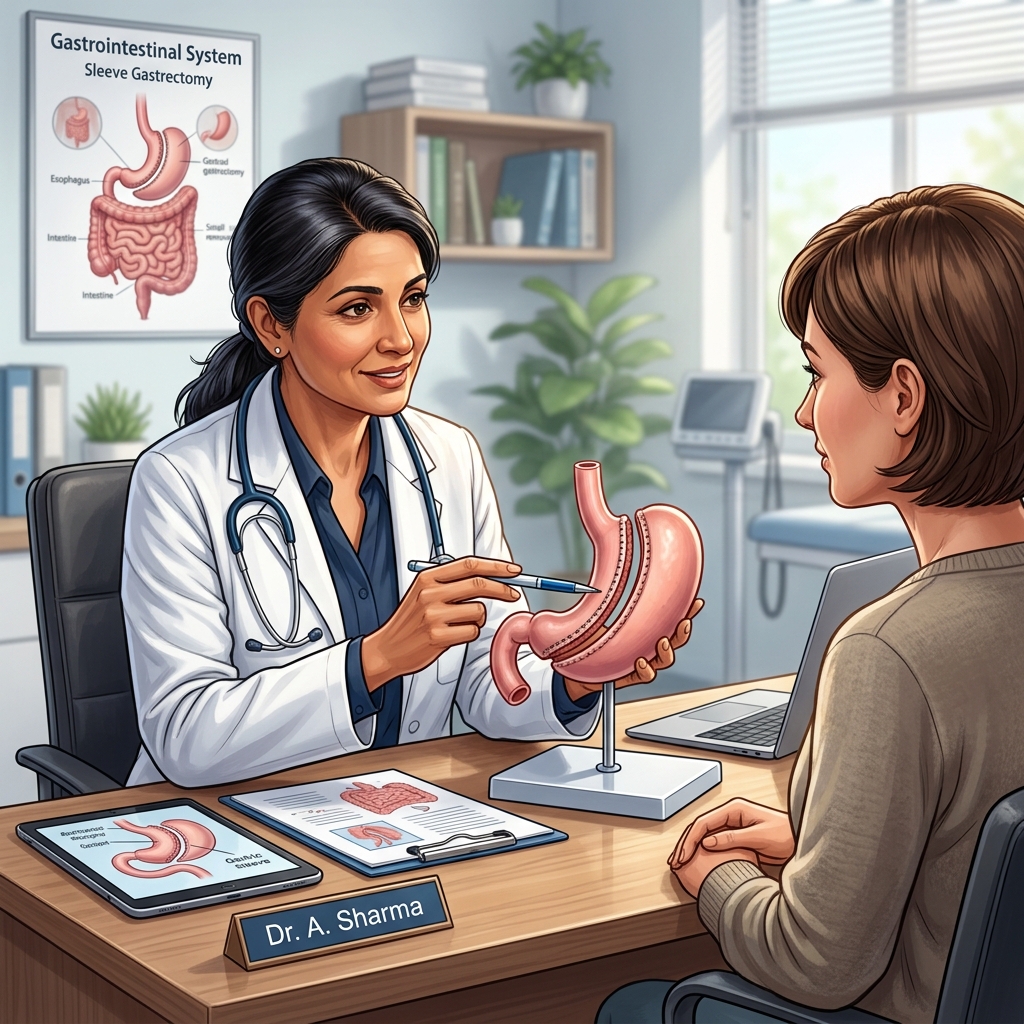
Gastric sleeve surgery is a restrictive bariatric procedure where approximately 70% to 80% of the stomach is surgically removed. The remaining portion of the stomach is shaped into a narrow tube or "sleeve" about the size and shape of a banana. Reducing the stomach size restricts the volume of food that can be consumed, leading to rapid and steady weight loss.
How Does Sleeve Gastrectomy Aid in Weight Loss?
The surgery works through two main mechanisms:
- Physical Restriction: A smaller stomach volume limits food capacity, resulting in early satiety and fullness.
- Hormonal Regulation: The section of the stomach that produces "Ghrelin" (the hunger hormone) is removed. This drastically lowers appetite and reduces cravings for months following the procedure.
Candidacy and Criteria for Gastric Sleeve Surgery
To qualify for sleeve gastrectomy based on World Health Organization guidelines, a patient must meet the following criteria:
- Have a Body Mass Index (BMI) of 40 or higher.
- Have a BMI between 35 and 39.9 along with at least one obesity-related condition, such as Type 2 diabetes, high blood pressure, severe sleep apnea, or high cholesterol.
- Be between 18 and 65 years old (pediatric and adolescent cases are evaluated on an individual basis).
- Be mentally prepared to follow a structured diet and lifestyle change post-operation.
Pre-Operative Tests and Preparations for Bariatric Surgery
To ensure maximum surgical safety, all patients undergo a thorough health evaluation before surgery:
- Complete blood panel, kidney, liver, and thyroid function tests.
- Electrocardiogram (ECG), chest X-ray, and cardiovascular assessment.
- Abdominal ultrasound to check the liver size and gallbladder health.
- Endoscopy (in selected cases) to rule out severe ulcers or hiatal hernia.
Laparoscopic Gastric Sleeve Procedure Steps in Turkey
The surgery is performed under general anesthesia using minimally invasive laparoscopic techniques:
- Micro-incisions: The surgeon makes 4 to 5 small abdominal punctures (about 1 cm each) to insert the laparoscope camera and surgical instruments.
- Resection: The stomach is separated and cut vertically using medical staplers that secure the tissue and prevent bleeding.
- Leak Test: The surgeon performs an intraoperative leak test with colored fluid or air to ensure the staple line is completely sealed.
- Closure: Incisions are closed using cosmetic, absorbable sutures that fade and become nearly invisible within a few months.
Recovery Timeline and Post-Operative Care
The surgery takes 1 to 2 hours, followed by a 24 to 48-hour hospital stay for close monitoring. Walking is encouraged a few hours post-op to stimulate blood circulation and prevent deep vein thrombosis. Patients can return to light office work within 10 to 14 days, but strenuous physical activities and heavy lifting must be avoided for at least 6 weeks.
Dietary Phases After Gastric Sleeve Surgery
The post-op diet transitions through four phases, each lasting 7 to 10 days, to allow the stomach staple line to heal safely:
- Phase 1 (Clear Liquids): Water, clear broth (beef, chicken, or vegetable), and unsweetened herbal teas.
- Phase 2 (Full Liquids): Skim milk, high-protein shakes, and smooth blended soups.
- Phase 3 (Pureed Foods): Blended lean proteins (tuna, chicken), mashed potatoes, soft cheese, and scrambled eggs.
- Phase 4 (Soft and Solid Foods): Gradually introducing well-cooked fish, chicken, and cooked vegetables. Always prioritize protein, chew slowly, and stop eating immediately upon feeling full.
Expected Cost of Gastric Sleeve Surgery in Turkey 2026
Turkey offers highly competitive prices for bariatric surgeries. For 2026, the cost of an all-inclusive laparoscopic gastric sleeve package in Istanbul ranges between $2,000 and $2,900. This package covers hospital stays, VIP airport-hotel transfers, all diagnostic pre-op tests, medication, and a full year of nutritional follow-up with a bariatric dietitian.
Laparoscopic gastric sleeve surgery helps patients lose 60% to 80% of their excess body weight within the first year, while curing or significantly improving Type 2 diabetes in over 80% of cases.