

What is a Dental Implant?
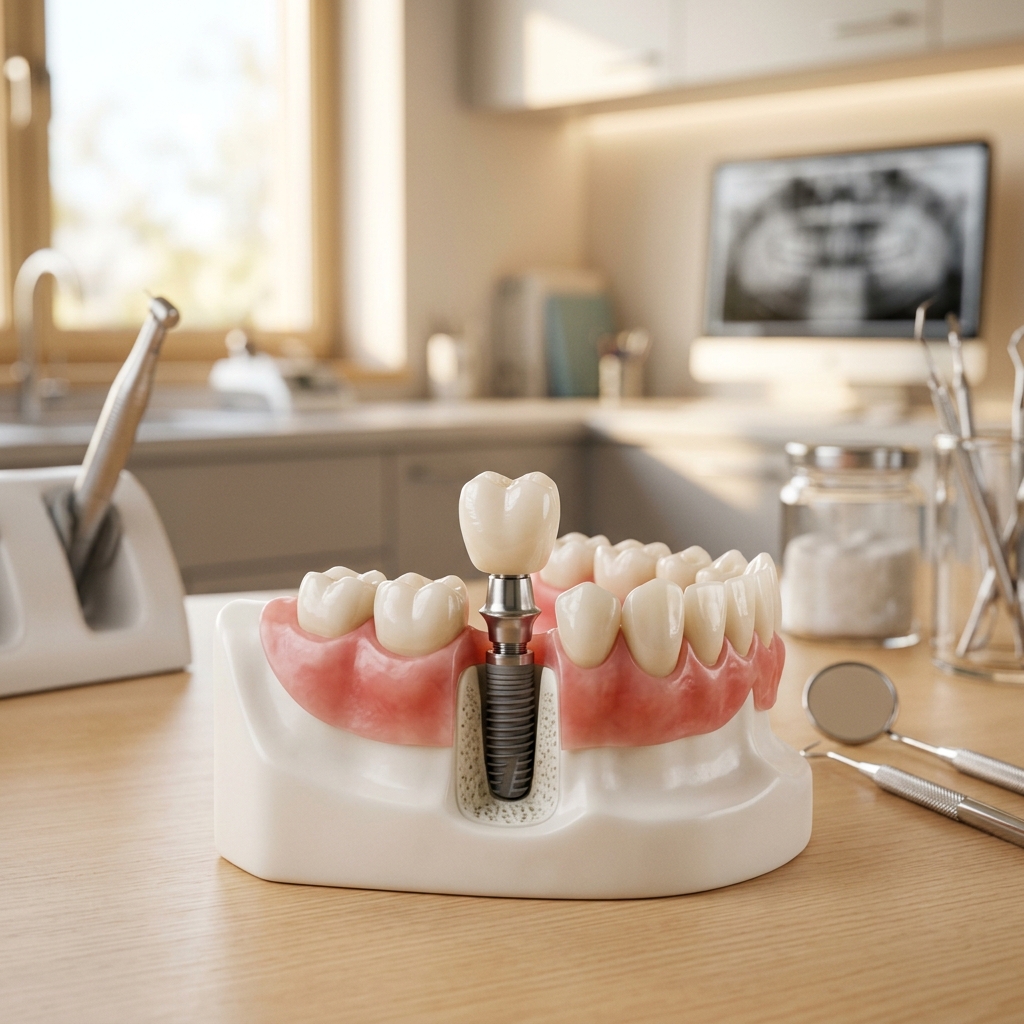
A dental implant is the most effective and reliable method to replace a missing tooth by surgically placing a biocompatible titanium "artificial root" (implant post) into the jawbone, attaching an abutment over it, and finally mounting a custom crown that perfectly replicates the shape and function of a natural tooth. This procedure aims to restore your chewing ability, speech clarity, and overall aesthetic confidence with a permanent solution.
Dental implants differ fundamentally from other restorative treatments. Implants rely on direct bone integration (osseointegration), whereas a traditional dental bridge requires grinding down healthy adjacent teeth to serve as support. Removable dentures, on the other hand, sit directly on the gums and often lack stability during eating or speaking. A successful outcome always begins with a comprehensive oral evaluation and a customized treatment plan tailored to your health.
Who is a Candidate for Dental Implants?
Before proceeding, it is vital to understand that suitability varies from patient to patient. A clinical evaluation using 3D imaging is the necessary starting point to draft a suitable treatment plan. You are a great candidate for dental implants if you experience:
- Loss of one or more teeth and are seeking a permanent solution that restores chewing function and prevents jawbone resorption.
- Good periodontal health free of active inflammation or gum disease that requires preliminary treatment.
- Sufficient jawbone density to anchor the implant post safely, or eligibility for a bone grafting procedure.
- A desire to invest in a long-term option instead of relying on temporary removable structures.
- Commitment to maintaining daily oral hygiene and attending scheduled follow-up visits with your dentist.
Important Note: While dental implants are an excellent option, the final choice depends on a detailed diagnosis. The best dental clinic in Istanbul can guide you through the initial evaluation to choose the safest path.
When is a Dental Implant Not the Best Option?
A dental implant shouldn't just be the "first option" at any cost; it must be the correct option at the right time. Rushing the procedure before preparing the oral environment can lead to implant failure. It is recommended to postpone the implant or seek alternative treatments in the following scenarios:
- Unstable Gum Health: Active periodontitis or untreated gum disease means the foundation is unprepared. Healthy gums are crucial for implant stability.
- Insufficient Bone Density: If the jawbone has resorbed and cannot support the post, you will require a bone graft first.
- Delayed Healing: Certain general health conditions (like uncontrolled diabetes) can impair healing and increase the risk of implant rejection.
- Heavy Smoking: Smoking reduces blood flow to oral tissues, significantly hindering healing and osseointegration.
- Severe Teeth Grinding (Bruxism): Continuous heavy pressure during sleep can stress the implant and crown, requiring a custom night guard.
- Incomplete Jaw Growth: Implants are not recommended for teenagers whose jawbones are still growing. Usually, patients must be at least 18.
What are the Types of Dental Implants?
Implant solutions depend on the number of missing teeth, their location, and the state of your oral tissues:
1. Single Tooth Implant
The ideal solution for a single missing tooth. One titanium post and a custom crown are placed without affecting neighboring teeth.
2. Molar Implant
Designed specifically for back teeth (molars) which bear the brunt of chewing forces. These require wider implants and precise planning to withstand high pressure.
3. Multiple Teeth Implants
For two or more adjacent missing teeth, a few implants can support a fixed bridge, eliminating the need to place a post for every single missing tooth.
4. Full-Arch Restoration (All-on-4 / All-on-6)
An advanced technique for patients missing all teeth in an arch. It secures a full fixed denture using just 4 or 6 strategically placed implants.
Step-by-Step Dental Implant Procedure
The implant journey involves several distinct steps to ensure safety and longevity:
- Diagnosis & Planning: Thorough clinical examination, digital impressions, and 3D CBCT scans to assess bone levels and locate nerves.
- Surgical Placement: Inserting the titanium post into the bone under local anesthesia or conscious sedation.
- Osseointegration: A healing period of 3 to 6 months for the bone to fuse securely with the implant.
- Abutment & Crown Fit: Attaching the abutment, taking digital impressions, and placing the final zirconia or E-max crown.
Pros and Cons of Dental Implants
Understanding the advantages and challenges is key to making an informed decision:
- Pros: Feels and looks like natural teeth, highly stable, prevents jawbone loss, and protects adjacent healthy teeth.
- Cons: Requires minor surgery, takes several months to complete, and has a higher upfront cost than removable alternatives.
Expected Cost of Dental Implants in 2026
Costs depend on the implant brand (Swiss, German, USA), clinical expertise, and additional procedures like bone grafting. In 2026, the average cost ranges between $800 and $2,500 per tooth, including the crown. Our partner clinics offer comprehensive packages that guarantee maximum value and success.