

Understanding Straumann Swiss Dental Implants
Are you considering replacing missing teeth and wondering **how long does the Straumann dental implant process take?** The quick answer lies in the brand's ultimate clinical achievement: **it takes just 3 to 4 months** from the initial consultation to final crown loading, compared to 6 to 9 months for traditional titanium implants. This drastic time-saving is directly attributed to Straumann's proprietary material science and surface treatments designed to accelerate biological osseointegration.

What Are Straumann Swiss Dental Implants?
Straumann Swiss implants have set the global gold standard for restorative and aesthetic dentistry since the company was founded in 1954 in Basel, Switzerland. Backed by decades of clinical research and bio-material engineering, Straumann is renowned for achieving success rates exceeding 98%, with implants lasting 25 years or more under standard daily hygiene.
The Step-by-Step Straumann Dental Implant Timeline
The dental implant process consists of several consecutive stages, each requiring a specific biological healing window:
Phase 1: Diagnosis & Surgical Planning (1 Day to 1 Week)
A comprehensive physical exam and a 3D CBCT digital bone scan are performed to assess bone width, height, and locate sinuses and nerves. If the gums are healthy, surgical placement is scheduled immediately. If gum treatment or extraction is needed, this is done beforehand.
Phase 2: Surgical Placement (1 to 2 Hours)
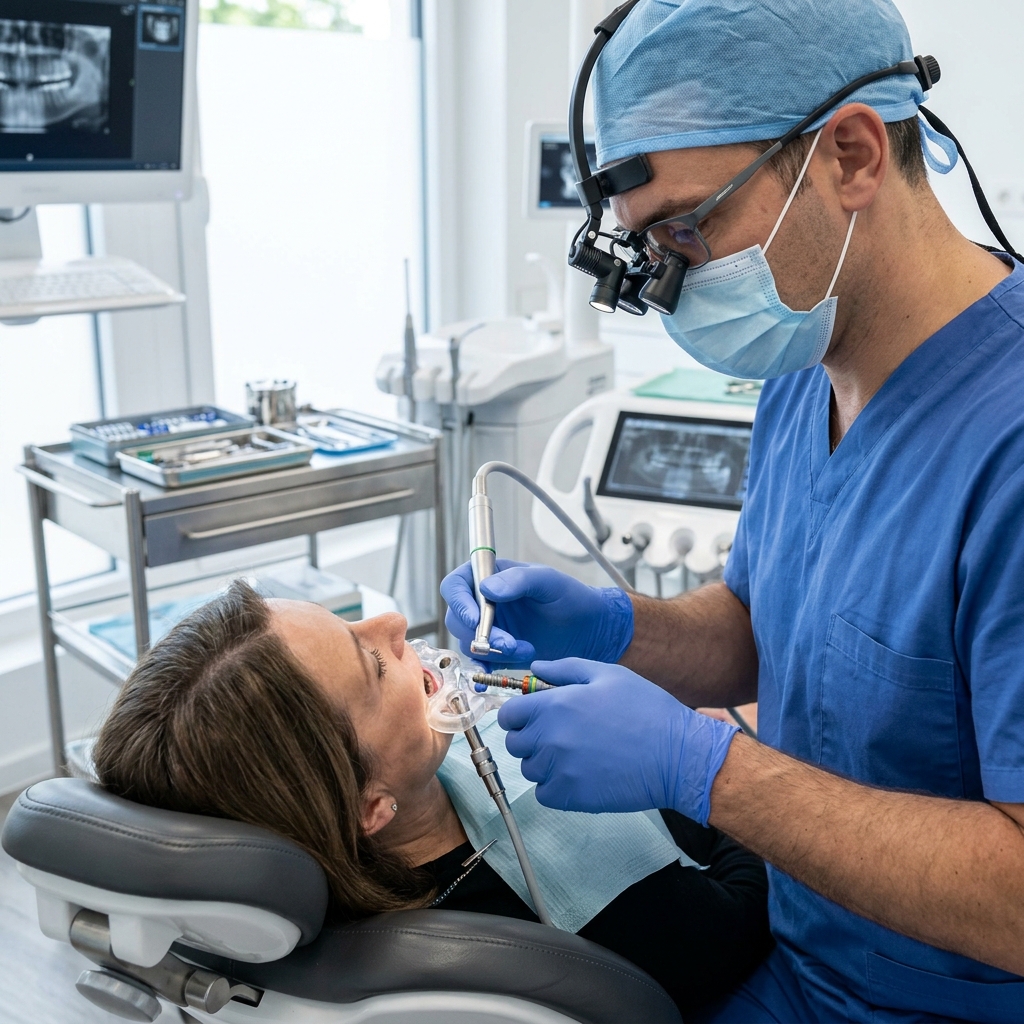
The implant is placed under local anesthesia at our partner clinics in Istanbul. The surgeon performs a minor micro-incision in the gums to secure the Straumann post. Thanks to digital surgical templates, placing a single implant takes only 20-30 minutes, totaling 1-2 hours for complex arches.
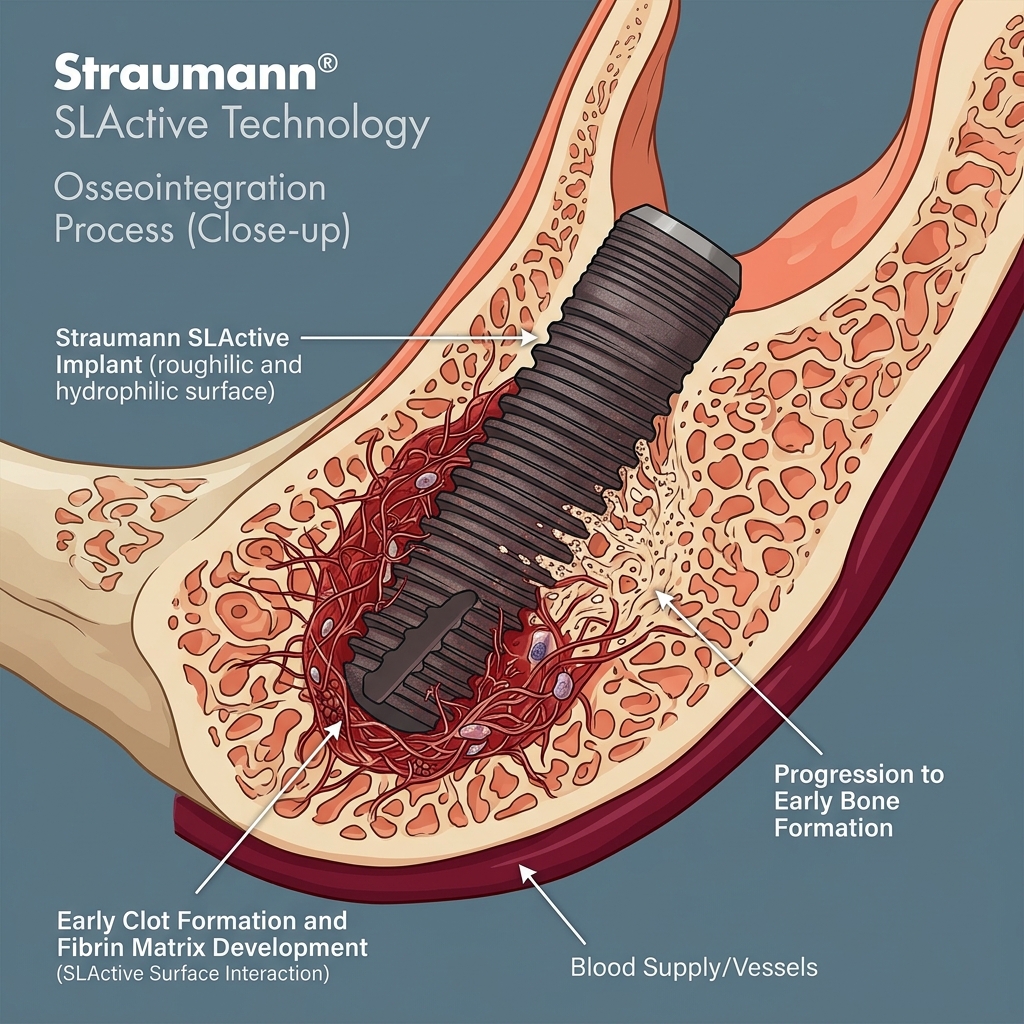
Phase 3: Osseointegration (3 to 4 Weeks with SLActive)
This is the critical phase where the jawbone cells fuse around the titanium-zirconium post. Traditional implants typically require 12 to 24 weeks to achieve stable osseointegration. **Straumann SLActive implants reduce this time to just 21-30 days**, cutting the waiting window by over 50%.
Phase 4: Abutment Connection & Final Restoration (1 to 2 Weeks)
Once stable bone integration is confirmed digitally, the abutment is attached, and a 3D digital oral scan is sent to the lab. The custom cosmetic crown (Zirconia or E-max) is fabricated and permanently bonded to the abutment within a week.
Exclusive Straumann Technologies That Shorten Healing Time
Straumann achieves its industry-leading fast recovery times through two major innovations:
- Hydrophilic SLActive Surface: The implant surface is treated and stored in a nitrogen-sealed saline solution to prevent oxidation, keeping it highly hydrophilic. When placed, it absorbs blood proteins and forms fibrin networks instantly, stabilizing the post within a month.
- Roxolid Metal Alloy: An innovative blend of 85% titanium and 15% zirconium, generating 40% higher mechanical strength than pure titanium. This allows the surgeon to use smaller implants, avoiding time-consuming bone grafting surgeries and saving 3 to 6 months of healing.
Immediate Loading with Straumann Implants
In selected clinical cases, patients can receive their new teeth in **just 48 hours**:
- Medical Criteria: Requires excellent jawbone density, zero active periodontitis, a non-smoking lifestyle, and achieving primary surgical stability of at least 35 Ncm.
- Restoration Protocol: The extraction and implant placement are performed, and an aesthetic temporary crown is loaded immediately. After 3-6 months, the temporary crown is replaced with the final restoration.
Factors That Can Extend the Straumann Timeline
The recovery timeline may vary depending on:
- Bone Grafting or Sinus Lifts: If bone resorption is severe, bone grafting is required first, adding 4 to 6 months to allow new bone to mature before placing the implant.
- Smoking Habits: Nicotine restricts local blood flow, delaying bone fusion and extending the healing window by 50%.
- Post-op Compliance: Maintaining a soft food diet and practicing meticulous home care during the first few weeks protects the implant from mechanical micro-movement.